


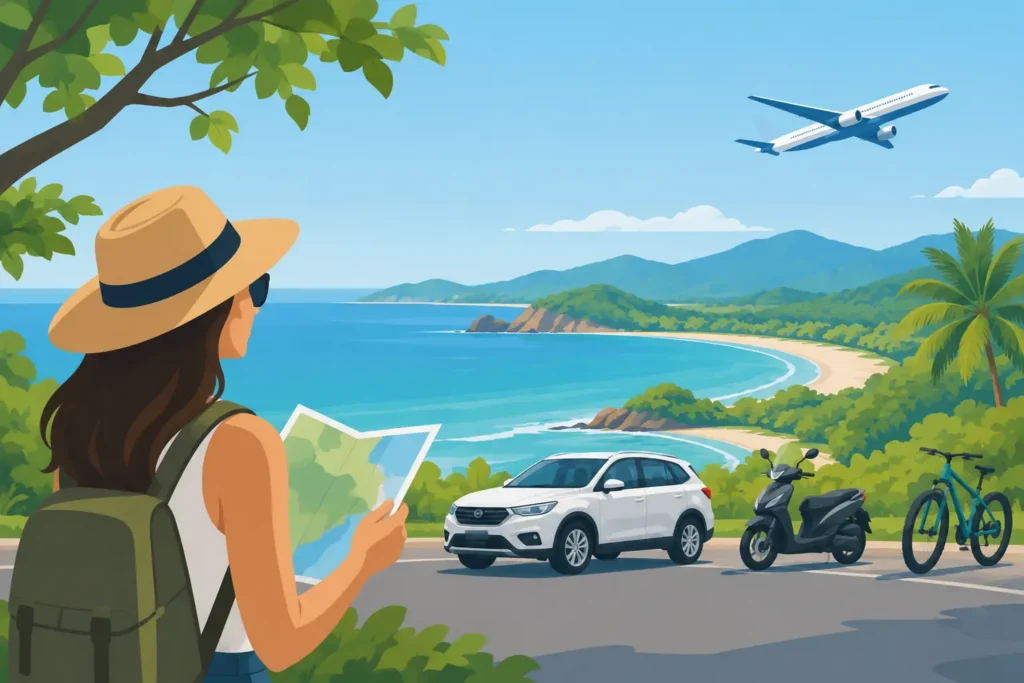
Your Guanacaste vacation starts moving the moment you land at Liberia International Airport. This Guanacaste vacation mobility guide helps you make the right call before the airport line, unfamiliar roads, or a missed tour forces the decision for you. The best transportation plan is not always the cheapest option. It is the one that gets your group comfortably from the airport to the beach, leaves room for the experiences you came to Costa Rica to enjoy, and keeps every transfer on your schedule.
Guanacaste covers a lot of ground. Tamarindo, Playa Flamingo, Playa Conchal, Papagayo, Nosara, Samara, and the region’s volcano and rainforest destinations do not sit around one central resort zone. Choosing how you move between them can shape the entire trip.
Start With Your Arrival Airport and Hotel Location
For most visitors, Liberia International Airport, known as LIR, is the easiest entry point for Guanacaste. It is close to the province’s northern Pacific beaches, but close is relative when you are arriving with luggage, children, surfboards, or a group that has already spent a full day traveling.
Popular beach areas can be anywhere from 30 minutes to more than two hours from the airport, depending on traffic, weather, road conditions, and the exact property location. Papagayo and Playa Hermosa are generally convenient from Liberia. Tamarindo, Flamingo, Conchal, and Las Catalinas require more driving. Nosara and Samara are farther south and need a more deliberate plan.
A private airport transfer is the strongest choice for travelers who want to arrive without negotiating fares, locating a rental counter, or driving after a long flight. Your driver meets you, handles the practical details, and takes you directly to your villa, hotel, or resort. For families and friend groups, the value becomes even clearer when the cost is shared and everyone arrives together.
If you are renting a car, build extra time into your arrival. You may need to complete paperwork, inspect the vehicle, load bags, set navigation, buy water and snacks, and adjust to local driving conditions before heading out. That freedom can be worthwhile, but it is not the same as walking off the plane and being on your way.
Choose Mobility Based on Your Vacation, Not Habit
Many travelers assume a rental car is mandatory in Costa Rica. Sometimes it is. Often, it is not.
A couple staying at a walkable Tamarindo hotel and planning two guided excursions may be better served by private transfers and scheduled tours. They avoid parking, skip the responsibility of nighttime driving, and can enjoy dinner, cocktails, and sunset without assigning a driver.
A family splitting time between Flamingo, Arenal, and Manuel Antonio has a different need. A multi-day van-and-driver service can turn a complex itinerary into a far more relaxed experience. Instead of managing directions, bags, fuel stops, and route changes, the family keeps the same trusted local transportation partner while moving across the country.
A rental vehicle makes the most sense when you plan to explore independently every day, stay at a remote property, carry significant gear, or move frequently on your own schedule. It also gives experienced Costa Rica visitors the flexibility to find smaller beaches, local restaurants, and lesser-known viewpoints. The trade-off is responsibility: road awareness, parking, insurance decisions, and keeping track of travel time all become yours.
Scooters and motorcycles can be exciting for short local rides in the right area, particularly for confident riders traveling light. They are not a casual replacement for a car on long transfers, rainy-season roads, or routes with loose gravel and limited lighting. An ATV adventure is even more distinct. It is a guided vacation experience, not your everyday airport transportation plan.
Guanacaste Vacation Mobility Guide: Know the Roads
Guanacaste rewards travelers who respect distance. A beach that looks nearby on a map can require a much longer drive than expected because of road surfaces, river crossings, traffic through town centers, or the final stretch to a hillside rental home.
During the dry season, dust and heat can affect unpaved roads. During the green season, rain can change conditions quickly, especially on secondary routes. Some remote accommodations are best reached in a higher-clearance vehicle, while others are perfectly accessible in a standard SUV or van. Ask your host or transportation provider about the final approach to the property before selecting a vehicle.
Avoid treating sunset as your departure deadline. Darkness arrives quickly near the equator, and rural roads may have limited shoulders, lighting, signs, or services. If your plans include a beach club, a dinner reservation, or a late return from an excursion, arranging transportation in advance is a smarter move than hoping a ride will be easy to find.
Also account for bags. A vehicle that technically seats six passengers may not comfortably hold six passengers plus checked luggage, carry-ons, a stroller, and beach equipment. Premium vacation transportation means having space to sit comfortably, not squeezing everyone into the smallest possible option.
Use Transfers for the Days That Matter Most
Private transportation is more than an airport pickup. It is a way to protect the best parts of your vacation.
Use it for an arrival day when everyone is tired. Use it for a transfer between resorts when you want to stop for lunch or a viewpoint without turning the day into a navigation exercise. Use it for a special dinner, a catamaran departure, a fishing charter, or a group night out when nobody should have to drive back along unfamiliar roads.
For groups, pre-arranged transportation keeps the day together. There is no dividing into separate taxis, no confusion about meeting points, and no need to coordinate multiple rental cars. A professional driver who knows the region can also offer practical local insight: when to leave, where traffic builds, what route fits the weather, and how much time the journey actually requires.
This is where one local partner makes a real difference. 506 Transfers can coordinate airport arrivals, regional transportation, rentals, guided tours, and multi-day service around the way you want to travel. That means fewer vendors to manage and more confidence that your airport pickup, beach transfer, and excursion timing work as one plan.
Plan Excursions Around Geography
Guanacaste is full of memorable experiences, but trying to see everything from one beach base can create more windshield time than vacation time. Group activities by area whenever possible.
From Tamarindo, Flamingo, and Conchal, ocean-focused days are easy: sailing, snorkeling, fishing, surfing, beach hopping, and sunset cruises. Inland experiences such as zip lines, hot springs, waterfalls, wildlife tours, and volcano country deserve an early start and a realistic return plan. They can be extraordinary full-day adventures, but they should not be squeezed between a late breakfast and an evening reservation.
If your itinerary includes Arenal or the Monteverde area, consider whether an overnight stay is worth it. It often is. A long out-and-back drive may be possible, yet it can leave little time to enjoy the destination. A multi-day route with a driver allows you to turn the transfer itself into part of the experience, with scenic stops and flexibility along the way.
Book Before You Need a Ride
High-demand weeks in Guanacaste fill quickly. Christmas and New Year’s, spring break, Easter week, school holidays, and major event weekends can limit vehicle availability and make last-minute logistics expensive. The same is true for larger vans, child seats, premium SUVs, and private drivers.
Book airport transportation as soon as flights and lodging are confirmed. Then reserve the days that have fixed departure times, such as catamarans, airport departures, and signature tours. Keep one or two open days for spontaneous beach time, but do not leave essential transfers to chance.
When requesting transportation, share the details that prevent surprises: flight number, number of travelers, luggage count, child-seat needs, hotel or villa address, and any mobility considerations. If you are traveling to a gated community or a remote vacation rental, provide the property name and arrival instructions. Clear information creates a better ride from the start.
The goal is simple: let Guanacaste feel expansive, not complicated. Arrange the rides that matter, choose independence only where it adds real value, and leave enough space in your itinerary to say yes when the Pacific sunset keeps you at the beach a little longer.