


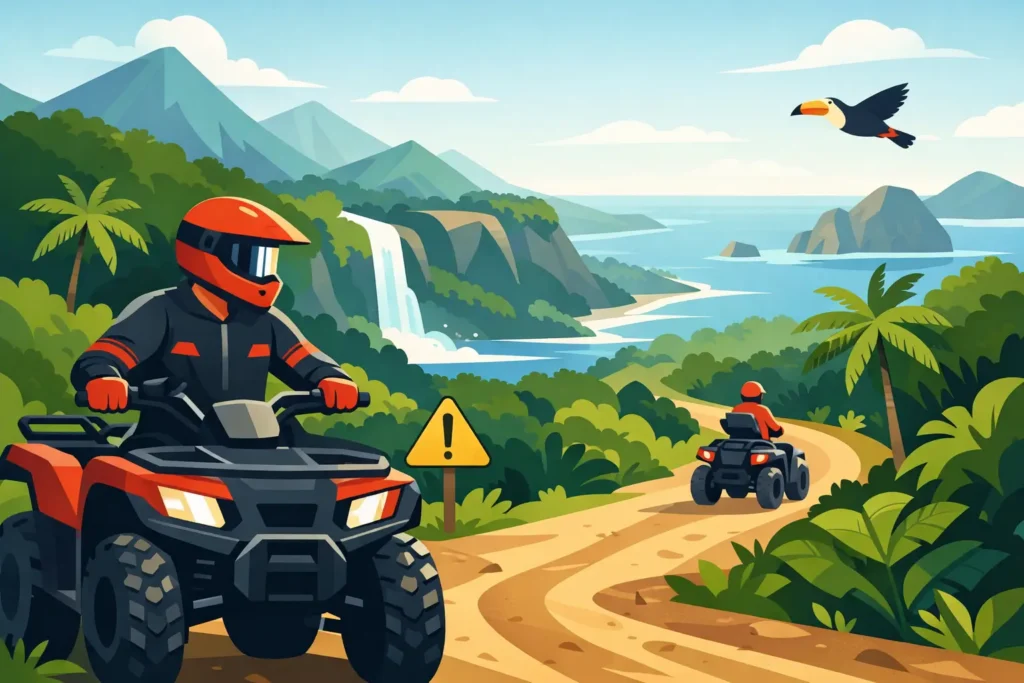
A sunset ATV ride near Tamarindo can be one of the best ways to see Costa Rica beyond the resort gate. But learning how to rent ATV safely means doing more than choosing the lowest daily rate and taking a quick photo beside the vehicle. The right rental puts you on a well-maintained machine, in proper safety gear, on routes that match your experience and the day’s conditions.
Costa Rica’s terrain is part of the thrill. It can also change quickly. Dry dirt roads turn slick after a tropical downpour, steep hills demand controlled braking, and local traffic does not always move the way first-time visitors expect. A little preparation protects your vacation, your passengers, and everyone sharing the road.
Choose an ATV Rental Company That Takes Safety Seriously
Start with the operator, not the ATV. A professional company should be comfortable answering direct questions about its maintenance routine, insurance coverage, age requirements, deposits, safety equipment, and approved riding areas. If the staff rushes you through the process, cannot explain the controls clearly, or treats a helmet as optional, choose another provider.
Ask whether the rental is intended for public roads, private trails, or both. That distinction matters in Costa Rica. Some ATVs are set up and registered for road use, while others are designed only for designated off-road areas. Riding an ATV where it is not permitted can create a legal problem and may void insurance coverage.
Reputable operators also set realistic expectations. They will tell you when a route is too technical for a first-time rider, when heavy rain makes a ride unwise, and when a guided experience is the better choice. That is not a limitation on your adventure. It is the mark of a company that wants you to return with great memories instead of an avoidable travel headache.
How to Rent an ATV Safely: Confirm the Rules Before You Pay
Rental requirements vary by company, vehicle type, and location, so verify the details before arrival. Most road-legal ATV rentals require a valid driver’s license, and operators commonly establish a minimum driver age. Do not assume a passenger can drive simply because they are old enough to ride. Confirm the policy in advance.
Read the rental agreement carefully, especially the sections covering damage, theft, roadside assistance, fuel, and prohibited use. Ask what happens if you get a flat tire, need help on a remote route, or return late because of weather. Find out whether the quoted price includes required insurance or whether coverage carries a deductible or exclusions.
Be especially clear about passengers. Some ATVs are built for one rider only. Carrying a second person on a single-rider vehicle affects handling, braking distance, and stability. It also puts both people at risk. Rent a properly designed two-up ATV when you plan to ride with a passenger.
Inspect the ATV Before You Leave
A clean-looking ATV is not automatically a safe ATV. Before you accept the keys, ask for a walk-through of the vehicle and take a few minutes to inspect it yourself. Photograph any existing scratches, cracked plastic, tire wear, or damage noted by the rental staff. Those photos can prevent confusion at return time.
Check these essentials before your ride:
- Tires should have visible tread, proper inflation, and no major cuts or bulges.
- Front and rear brakes should feel firm and responsive, not soft or spongy.
- Headlights, brake lights, turn signals, and horn should work if you will use public roads.
- The throttle should return smoothly when released, and the steering should move freely.
- Fuel level, mirrors, parking brake, and storage compartments should be checked before departure.
Have the staff show you how to start and shut off the ATV, engage reverse, use the parking brake, and operate the lights. If it has automatic and manual drive settings, ask when each should be used. Do not pretend you understand a control you have never used. A two-minute demonstration is far better than figuring it out halfway up a muddy hill.
Wear the Gear That Matches the Ride
Helmets are non-negotiable. Choose one that fits snugly without painful pressure points, fasten the chin strap every time, and replace it if it is visibly damaged. A loose helmet offers far less protection in a fall.
Closed-toe shoes are the next priority. Sneakers or sturdy hiking shoes protect your feet from rocks, hot engine components, branches, and shifting pedals. Flip-flops and ATV riding do not belong together, even for a short trip to a beach town lookout.
For longer rides, dusty roads, or wet-season conditions, add eye protection and a lightweight long-sleeve layer. Sunglasses can help in bright conditions, but goggles provide better coverage from dust, insects, and flying grit. Bring water, sunscreen, and a charged phone in a secure, waterproof bag. Costa Rica’s sun can feel intense even when clouds are building overhead.
Plan a Route for Your Actual Experience Level
An ATV can make the road to a waterfall, viewpoint, or rural restaurant feel more exciting. It does not turn an inexperienced rider into an expert. Choose a route based on your least experienced driver, not the most confident person in your group.
Before leaving, ask about road surfaces, elevation changes, river crossings, construction, and cell service. In areas around Guanacaste, Tamarindo, Flamingo, and Liberia, conditions can differ dramatically within a few miles. A graded dirt road may be easy in the morning and deeply rutted after an afternoon storm.
Avoid riding after dark unless your route is familiar, road-legal, and the rental provider has specifically confirmed it is appropriate. Limited lighting, animals on the road, potholes, and other vehicles make nighttime ATV travel a poor trade for most vacationers. Build in enough time to return before sunset, with a buffer for photos, traffic, or a wrong turn.
Never ride on beaches, through protected areas, or across private property without clear authorization. Costa Rica’s natural beauty deserves respect, and local regulations exist to protect wildlife, nesting zones, and coastal ecosystems. Stay on approved roads and trails.
Ride Defensively on Costa Rica Roads
If your rental is road-legal, treat it like a motor vehicle, not a toy. Drive on the right, obey posted signs, use signals where available, and leave plenty of space between your ATV and other traffic. Buses, trucks, motorcycles, bicycles, pedestrians, and wildlife can all appear quickly on narrow roads.
Keep both hands on the handlebars and both feet where the vehicle design intends them to be. Slow down before corners, especially on gravel, sand, or wet pavement. Brake gradually and in a straight line whenever possible. Sudden steering or hard braking can cause a loss of control, particularly with a passenger or on uneven ground.
Do not drink and ride. Vacation cocktails can wait until the keys are returned. Alcohol, heat, unfamiliar roads, and off-road vehicles are a risky combination, and the consequences can extend far beyond a ruined afternoon.
If you are riding with friends, do not race, tailgate, or try to keep pace with a more experienced rider. Agree on meeting points instead of pushing beyond your comfort level. A responsible group lets every rider travel at a safe speed.
Consider a Guided ATV Experience
Independent rentals offer flexibility, but guided ATV tours are often the smarter choice for first-time riders, families, and travelers unfamiliar with the area. A knowledgeable guide can select suitable routes, explain local conditions, help with mechanical issues, and keep the group away from restricted or high-risk areas.
For guests who want a premium, well-coordinated day, 506 Transfers can pair local transportation expertise with curated ATV experiences that fit your destination and travel plans. It is an easy way to spend more time enjoying Costa Rica and less time sorting out unfamiliar roads.
The best ATV day is not measured by how fast you ride or how muddy you get. It is the one where you reach the viewpoint, enjoy the wild landscape, and return safely with enough energy left to tell the story over dinner.